NYC brunch
How brunch works in New York City
Brunch does the job of breakfast and lunch in one sitting, and New Yorkers treat the weekend version as a ritual. Here is where the word came from, how the habit spread and what to expect when you go looking for a table.
Where the word came from
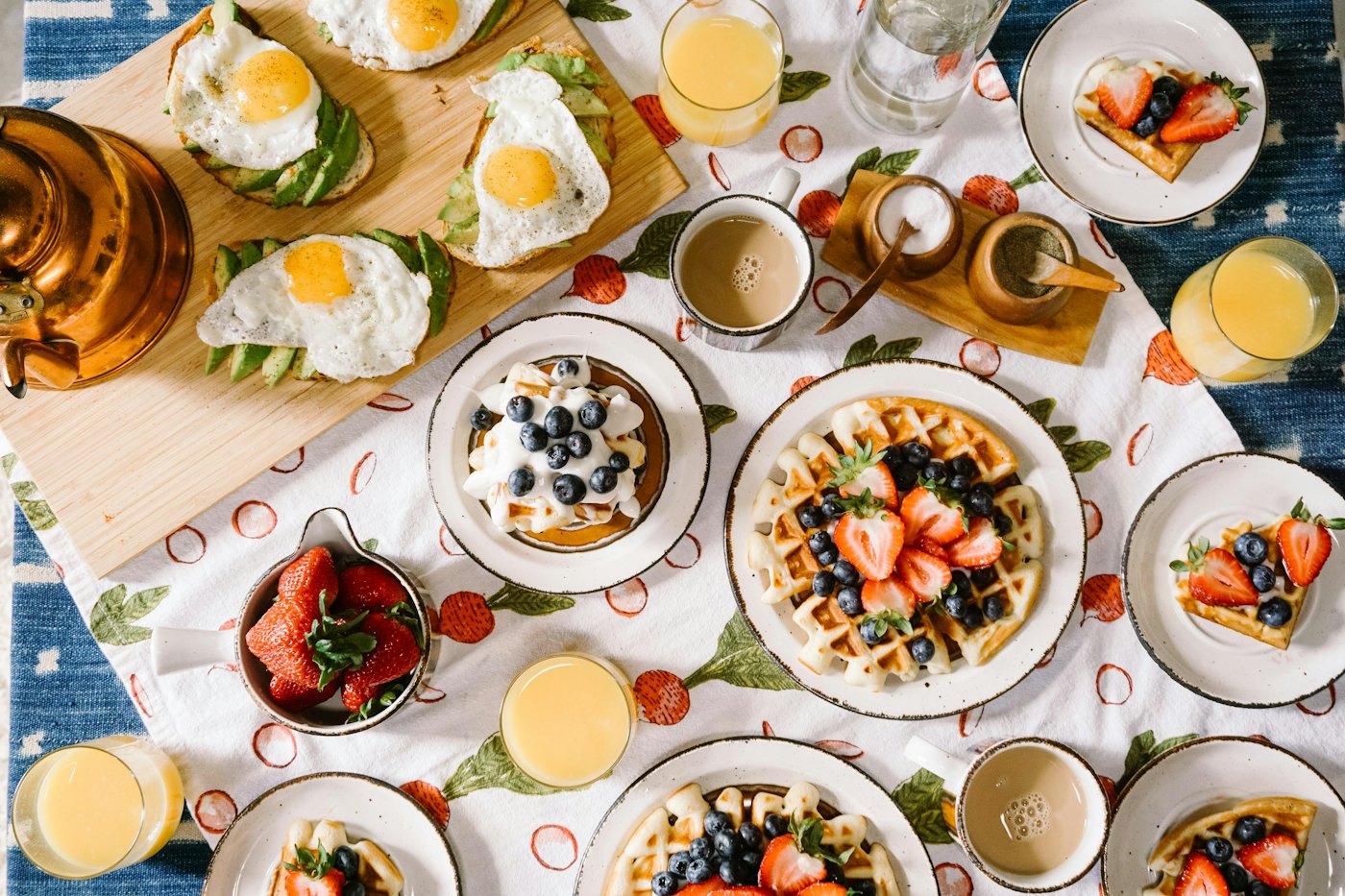
Brunch is exactly what it sounds like, a blend of breakfast and lunch. Merriam-Webster defines it as a meal usually taken late in the morning that combines a late breakfast with an early lunch, and it traces the word back to the end of the nineteenth century.
The usual credit goes to the British writer Guy Beringer. According to Smithsonian, his essay "Brunch: A Plea" in Hunter's Weekly argued for lighter food served late on Sunday morning in place of the heavy meal that traditionally followed church. Researchers have since turned up the word in print a few months before his essay, so it is fairer to say Beringer popularized it than that he coined it.
How brunch reached American tables
Smithsonian reports that the idea took hold in the United States between the two world wars. Hotels pushed it early, since most restaurants were closed on Sundays, and after the Second World War restaurants followed with big spreads and morning cocktails such as Bloody Marys, Bellinis and Mimosas.
That hotel connection is part of why a place like Norma's made sense. A dining room inside a Midtown hotel could serve elaborate breakfast plates all day to guests and locals alike, and for years it did.
See how far a hotel breakfast could go
From a caviar topped frittata to French toast under chocolate sauce, these are the plates Norma's was known for.
See the famous dishesGetting a table in the city
There is no single system. Each New York restaurant decides when its tables open and where, and Time Out found the busiest ones releasing bookings anywhere from three weeks to a month ahead, often at a set hour of the morning.
- Many popular rooms use booking apps such as Resy or OpenTable, while others rely on SevenRooms or still take reservations by phone.
- When a slot is gone, apps often offer a notify option that alerts you if a table opens up through a cancellation.
- Some places keep a little room for walk-ins when cancellations and no-shows leave space, though this varies a lot.
The practical move is to check the restaurant's own website first. It will say which system it uses, how far ahead it books and whether showing up without a reservation is worth a try.
Around West 56th Street
If you are in the Midtown blocks where Norma's once served breakfast, the park is close. Central Park begins about three blocks north, and Columbus Circle sits at the park's southwest corner, where Broadway, Central Park West, Eighth Avenue and 59th Street meet around a monument to Christopher Columbus.
A late meal followed by a slow loop through the southern end of the park is an easy way to spend a weekend morning. Our Central Park article covers the history behind those paths and lawns.
Habits that make brunch easier
- Go early or late. The middle of a weekend morning tends to bring the longest waits.
- Read the cancellation rules before you book, because restaurants set their own terms for late changes and no-shows.
Sources
- Merriam-Webster, brunch
- Smithsonian Magazine, The Birth of Brunch
- Ben Yagoda on the American Dialect Society list, early uses of brunch
- Time Out New York, how people get the hardest reservations in NYC
- Central Park Conservancy, Columbus Circle
- CentralPark.com, Thompson Central Park
Corrections
Booking rules change often. If something here no longer matches how tables work, let us know.
Send a correctionMore to read
Something for the walk after brunch
Three longer articles cover Central Park's beginnings, the names we give our meals and how to pick the right meal for a business meeting.