Article
Why Central Park was built
A growing city needed somewhere to breathe. The answer was a park big enough to feel like the countryside, set in what was then the far edge of town and is now the middle of Manhattan.
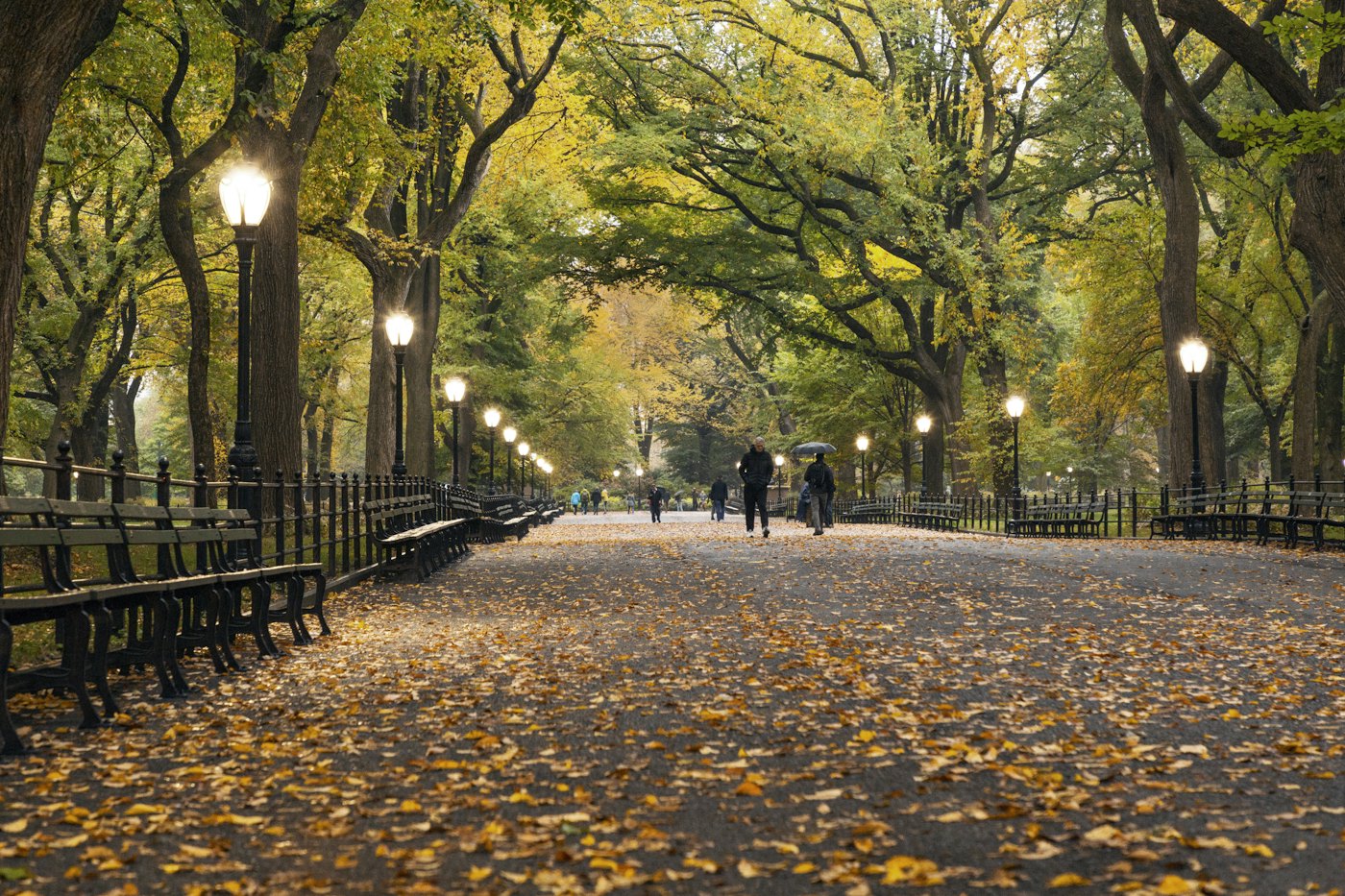
A park for a crowded city
By the middle of the nineteenth century, New York was growing fast and needed more room for recreation. The Central Park Conservancy, the nonprofit that cares for the park today, describes the original purpose plainly: give city dwellers a taste of the countryside, a break from the strain of urban life and a place to mix with nature and with each other.
That purpose has held up. The park still draws enormous crowds, with the Conservancy counting about 42 million visits a year, and it has made room for newer kinds of play without losing the feeling of an escape.
Its pull reaches well beyond the park walls. Hotels and restaurants on the surrounding streets have long sold themselves on being close to it, and Norma's, the breakfast restaurant on West 56th Street that has since closed, stood about three blocks south of its edge.
Who designed it
The design came from Calvert Vaux and Frederick Law Olmsted. According to the Olmsted Network, Vaux pressed city leaders to hold a public competition for the design and then asked Olmsted to work with him on an entry.
Their plan treated the park as a sequence of different scenes. Open lawns, woodland, winding streams and broad lakes were meant to be taken in while moving along curving paths, a carriage drive or a bridle path. The finished park covers 843 acres, and the Conservancy notes that it shaped how other American cities designed their own parks.
The park is also formally protected. It is a National Historic Landmark and a Scenic Landscape of the City of New York, recognition for a piece of landscape architecture that many consider a masterpiece.
Making a morning of it?
Our brunch page explains how tables work in the city and what sits around the southern edge of the park.
Read the brunch guideWhat stood on the land first
The site was not empty. When planning began, it lay far from the built up part of the city, with small farms, some industry and scattered homes among marsh and rocky hills.
The most crowded part of the land was Seneca Village, a community that was largely African American and included many people who owned their property. The Conservancy counts roughly 225 of the 1,600 residents who were forced out through eminent domain as Seneca Village residents. The Conservancy's own history pages now give that community a prominent place.
More than lawns
Over the years the park gained ball fields, skating rinks, formal gardens, a zoo, a carousel, monuments and space for concerts. It also works as habitat. The Conservancy points out that more than 200 bird species use it as a rest stop along the Atlantic Flyway, the migration route that runs along the East Coast.
Saved by the people who use it
The park has not always been cared for. Proposals for new features, large events and uses that had nothing to do with recreation have all pressed on it, and periods of neglect and money trouble left it badly run down.
Each time, New Yorkers pushed back. After a long, steep decline in the later twentieth century, a group of citizens formed the Central Park Conservancy to restore the park in partnership with the city, and the Conservancy has looked after it ever since.
Sources
- Central Park Conservancy, Park History
- Central Park Conservancy, About the Conservancy
- Olmsted Network, Calvert Vaux
- National Park Service, Seneca Village
Keep reading
Corrections
Know the park's history well and spotted a slip? Send the detail along with a source.
Send a correctionFrom the guide
The breakfast spot three blocks south
Read how Norma's turned breakfast into an all day affair on West 56th Street, and why it is no longer there.